Platformeris off Tuesday. This is a column about AI. My fiancé works at Anthropic. See my full ethics disclosure here.
I.
Early Friday morning, according to a criminal complaint, a 20-year-old man threw a Molotov cocktail at Sam Altman’s house before driving to OpenAI headquarters and threatening to kill everyone inside.
The incident came a few days after someone fired 13 rounds at the home of an Indianapolis city councilor who had expressed support for a data center project; a note left at the scene read “no data centers.”
The escalating political violence over AI is terrifying, morally wrong, and completely ineffectual. The spread of AI systems, despite their growing unpopularity, will not be stopped by a few stray bullets. And among the many reasons to be alarmed by incidents like the ones we have seen over the past week is that the perpetrators seem too disturbed to understand that.
On Friday afternoon — in between the firebombing and a shooting near his property that the company said was unrelated — Altman reflected: on the attacks, last week’s New Yorker investigation into his tenure as CEO, the state of AI, and growing public unease about the technology. After talking up AI’s potential to create great benefits, he also sought to validate the fears of those afraid of what the future might bring. “The fear and anxiety about AI is justified,” Altman wrote, underneath a photo of his husband and baby. “We are in the process of witnessing the largest change to society in a long time, and perhaps ever.”
Altman excels at reassuring you that he is on your side — this is one of the themes of the New Yorker profile — and he takes pains here to find common ground. He says he does not want to see AI power become too concentrated, and that it should be governed democratically. “It is important that the democratic process remains more powerful than companies,” he writes, in one of many lines in the piece that I wholeheartedly agree with.
Altman concludes by saying he sympathizes with anti-tech sentiment and “welcome[s] good-faith criticism and debate.” “While we have that debate,” he writes, “we should de-escalate the rhetoric and tactics and try to have fewer explosions in fewer homes, figuratively and literally.”
II.
Altman was writing in the aftermath of a traumatic event, and I’m tempted to leave it there. There’s nothing wrong with calling on cooler heads to prevail, or to hope that the past week’s violence was an aberration. I hope it was, too.
And yet I keep coming back to Altman’s phrase “de-escalate the rhetoric.” After all, it was Altman and his fellow AI CEOs who have spent the past decade speaking about AI in existential terms; some of that language can be found in Altman’s very blog post calling for calm.
He’s been writing that way for a long time.
“Development of superhuman machine intelligence is probably the greatest threat to the continued existence of humanity,” Altman wrote in a 2015 blog post. Speculating on the arrival of superintelligence, he added: “Evolution will continue forward, and if humans are no longer the most-fit species, we may go away.”
In 2023, Altman signed a statement from the nonprofit Center for AI Safety that “Mitigating the risk of extinction from AI should be a global priority alongside other societal-scale risks such as pandemics and nuclear war.” Google DeepMind CEO Demis Hassabis and Anthropic CEO Dario Amodei signed the statement as well.
During a podcast appearance last year, Altman likened the effort to build superhuman AI to the Manhattan Project. “There are these moments in the history of science where you have a group of scientists look at their creation and just say, you know, what have we done?” he said. “Maybe it's great, maybe it's bad, but what have we done?”
Altman’s fellow CEOs have expressed similar levels of alarm. “We are summoning the demon," Elon Musk said in 2014. In January, in a long essay about risks posed by AI, Amodei wrote: “Humanity needs to wake up.”
And to some degree, humanity has woken up. One recent survey found that AI is rising in importance to voters faster than any other issue. That same survey found that a majority of voters believe AI is advancing too quickly, and that superintelligence would be mostly harmful to people. Meanwhile, a separate survey from Pew last year found that a majority of Americans believe that AI will lead to fewer jobs in the next 20 years.
Look no further than last week’s announcement of Anthropic’s Mythos model, and its unsettling ability to find new vulnerabilities in decades-old open source software, to understand that the CEOs were being honest when they warned that AI would introduce new risks into the world.
Given these facts, I struggle to understand what it would mean to “de-escalate the rhetoric” around AI. The CEOs are more convinced than ever that powerful intelligence will arrive within the next few years. The public increasingly believes them — and is appalled by the implications. It seems strange to suggest that, amidst accelerating breakthroughs in AI model performance, everyone needs to calm down.
If we really might be facing “the greatest threat to the continued existence of humanity,” as Altman once wrote, shouldn’t we expect people at some point to (non-violently) freak out?
III.
Altman’s proposed solution to the upheaval that OpenAI and its peers are planning is democratic governance. “Laws and norms are going to change, but we have to work within the democratic process, even though it will be messy and slower than we’d like,” he wrote in his weekend blog post.
This is a good instinct: one of the virtues of democracy is the way that it gives people a feeling of control over their own lives. People who believe that they can rein in AI companies through votes and laws and regulations will be much less likely to turn to violence.
But when legislatures have tried to regulate AI, OpenAI has fought them at every turn. The company lobbied against California’s SB 1047, which sought to set safety standards for frontier AI companies; the governor then vetoed it. OpenAI sent a sheriff to the home of a nonprofit advocate for California’s SB 53, which creates transparency requirements for AI companies, to deliver a subpoena as part of an inquiry into whether nonprofits were being directed or influenced by Musk. The company lobbied the European Union to weaken the AI Act. Most recently it backed an Illinois bill that would shield OpenAI from liability in cases where its models are used to cause serious harm so long as they did not “recklessly or intentionally” cause it and agreed to publish safety reports.
To some extent, yes, this is “working within the democratic process.” But the Illinois case shows what that looks like in practice: a company writing rules to limit its own accountability. And the more that OpenAI seeks to stifle efforts to regulate it, the more infuriated the general public will become.
Altman is right that words have power, and that AI anxiety should not boil over into open violence. To point out that he has consistently talked about the risks of AI systems is in no way to suggest that he deserved to be attacked over it.
But at the same time, the sudden call for calm does ring hollow coming from someone who spent a decade sounding the alarm, whose predictions look increasingly prescient — and who now uses the company’s resources to fight efforts to put his company under democratic oversight.
Ultimately, the public’s disdain for AI was not invented by journalists. It was co-created by the people building the systems, who have consistently told us that it is imminent and dangerous. That the public has now begun to take them at their word should not surprise them. Isn't that what they have been asking for all along?
But they should listen to what the public is asking for, too. AI companies are asking us to trust them with a technology that everyone involved believes could end in disaster. The least they could do in return is let the rest of us have a vote.
A MESSAGE FROM OUR SPONSOR
Providing a clearer view of care
UnitedHealth Group is making care easier to navigate by investing in tools that help patients find providers near them and compare costs.
"More transparent pricing benefits everyone." - Dr. Kailey G, Pediatrician
What happened:OpenAI’s Chief Revenue Officer, Denise Dresser, sent staff a pugnacious memo about the company’s strategic direction — and its chief competitor, Anthropic.
“The market is as competitive as I have ever seen it,” Dresser wrote, and “there is no question it can be noisy, volatile and distracting at times.”
Dresser promoted the company's pivot to the enterprise and celebrated that demand for enterprise services via new partner Amazon has “been frankly staggering.”
She also said OpenAI’s “analysis” shows Anthropic is inflating its reported annualized revenue by $8 billion. “They use accounting treatment that makes revenue look bigger than it is, including grossing up rev share with Amazon and Google.” Dresser said. She added that Anthropic made a “strategic misstep to not acquire enough compute.”
Dresser had an opinion on Anthropic’s message, as well as their finances: “Their story is built on fear, restriction, and the idea that a small group of elites should control AI,” she wrote.
“Our positive message will win over time,” Dresser told employees.
Why we’re following: We were delighted by this memo’s pettiness — and curious about whether Anthropic is, in fact, cooking its books. What’s Dresser talking about when she says Anthropic is “grossing up” its revenue share?
Well, Anthropic has some cloud partners to which it pays a cut of revenue. But it reports gross revenue. That means it includes the cut that it later pays to partners AWS, Microsoft, and Google in its financials. OpenAI, on the other hand, doesn’t report gross revenue via its cloud partnership with Microsoft — it reports net revenue, minus Microsoft's share.
Both practices are allowed under standard US accounting principles, depending on who is considered the “principal” in the transaction. Anthropic and OpenAI’s partnerships have different terms, so it’s defensible for them to report the revenue from these partnerships differently.
Where’s the $8 billion coming from? While Dresser didn’t share details of her analysis, an anonymous source gave the same $8 billion figure to Semaforlast week — according to Semafor, that number was “based on how much OpenAI would add to its run rate if it counted gross revenue instead of net revenue.”
While it is true that OpenAI is using a more conservative accounting practice than Anthropic, we have no idea whether that the delta between their gross and net revenue is the same as Anthropic’s.
So why was Dresser repeating that analysis? Well, in the lead-up to both companies potentially IPOing this year, they can’t be happy that Anthropic’s latest reported ARR of $30 billion is higher than the $25 billion that OpenAI last reported. And independent analysis shows Anthropic is closing in on OpenAI’s share in the enterprise market. The race is heating up!
What people are saying: On X, Brad Sams, VP at software company Stardock, wrote, “The gloves are coming off 🍿”
Ex-OpenAI policy researcher Miles Brundagewrote, “OpenAI leaders should stop caricaturing Anthropic.” He added, “It encourages tribalism at a time when safety cooperation is urgently needed.” He thinks they have the wrong idea: “Don’t know this person so am assuming she is genuine but Anthropic’s 'story' is not 'built on fear, restriction, and the idea that a small group of elites should control AI.'”
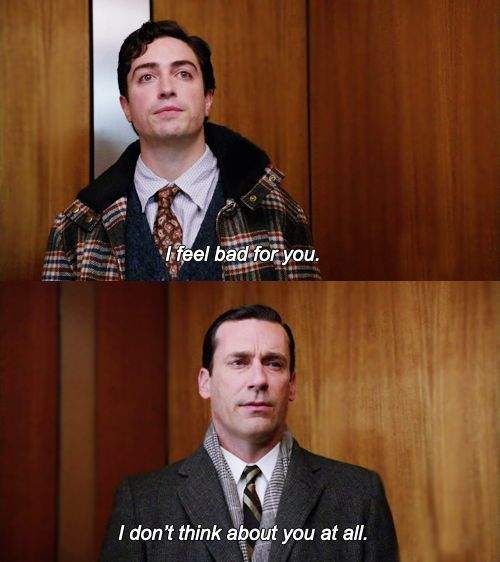
New York Times reporter Mike Isaacwrote, “the openai/anthropic feud is like the mad men elevator meme but both companies are ginsberg.” [If you’ve forgotten, Ginsberg is the first guy (below). Platformer agrees that, if nothing else, the two companies seem to be thinking about each other a lot.]
— Ella Markianos
Side Quests
Reddit was ordered to appear in front of a grand jury as part of President Trump’s effort to unmask anonymous critics of ICE.
Investors in Trump’s family crypto venture World Liberty Financial are accusing the project of secretly letting insiders freeze token holders’ funds.
Emil Michael, the Pentagon’s under secretary for research and engineering, made up to $24 million selling xAI stock after the Pentagon struck deals with the company.
A look at how the escalating AI arms race is reminiscent of the nuclear arms race.
Maine is set to become the first state to successfully impose a temporary ban on data center construction.
The new EU leader in charge of competition policy, Anthony Whelan, has signaled he will probe Big Tech companies despite pressure from Trump.
A judge blockedArizona’s criminal case against Kalshi at the CFTC’s request.
Three senior OpenAI executives behind the Stargate initiative are leaving and joiningMeta, sources said. An internal OpenAI tool downloaded a compromised update from the Axios software. OpenAI opened its first permanent London office.
Anthropic’s donations can’t be used to influence federal elections, the company said. Anthropic hired lobbying firm Ballard Partners, which has strong ties to Trump, following its Pentagon fight.
Vice President JD Vance and Treasury Secretary Scott Bessent reportedly questioned leading tech CEOs, including Dario Amodei, about the security of AI models before Anthropic released Mythos. Trump officials urged Wall Street banks to test the Mythos model internally, sources said. UK financial regulators are reportedly rushing to assess the risks posted by Mythos.
CoreWeavewill provide Anthropic with data center capacity as part of a multiyear deal. Anthropic has reportedly asked Christian religious leaders for advice on how to guide Claude’s moral development. Claude for Word is now available in beta.
OpenAI accusedElon Musk of a “legal ambush” by suddenly changing direction in his lawsuit. Musk is experiencing a string of legal losses. A verified @elonmusk account posted on TikTok for the first time, and a verified @elonmusk handle surfaced on Instagram.
xAI suedColorado to challenge its landmark AI bill aimed at protecting against AI “algorithmic discrimination.” (xAI said the bill would force it to “promote the state’s ideological views on various matters, racial justice in particular.”) X is reducing payments to clickbait and news aggregation accounts.
The majority of Europeans don’t trust American or Chinese tech companies with their data, a new survey showed.
Meta is reportedly building an AI version of Mark Zuckerberg that can talk to employees in his place.
The appearance of Polymarket bets in Google News was an error, Googlesaid. Gmail end-to-end encryption is now available on all Android and iOS devices. YouTube is raising prices on its Premium subscription.
Microsoft is building new Copilot features inspired by OpenClaw.
Snapannounced a partnership between its AR glasses subsidiary Specs and chipmaker Qualcomm.
Roblox is implementing an age verification process to ensure users are over the age of nine.
A look at how small AI startup Black Forest Labs is seeing success in AI image generation and its physical AI dreams.
The Wayback Machine is facing setbacks as major news organizations restrict access due to AI copyright concerns.
A look at whether prediction markets can improve weather forecasts.
Clients are increasingly sending lawyers numerous AI-generated questions and driving up fees. AI in the workplace is driving some productivity gains but not fundamental shifts in how work is done, according to a new Galluppoll. Stanfordreleased its 2026 AI Index Report.
A look at how an intense relationship with an AI chatbot turned fatal.
We're so quick to call these people who are pushing back in the only way left available to them as deranged. If we continue to ignore the anti-democratic nature of our current moment we are destined to a future where this is sadly much more common.
I originally started writing this piece about something else entirely — the ridiculous Oracle deal, what the consequences of me being right might be, and a lot of ideas that I'll get to later, but I couldn't stop looking at what NVIDIA is doing.
The answer is simple: NVIDIA is effectively incubating its own customers, creating the contracts necessary for them to raise debt to buy GPUs — from NVIDIA, of course — which can, in turn, be used as collateral for further loans to buy even more GPUs. These compute contracts are used by AI compute companies as a form of collateral — proof of revenue to reassure creditors that they're good for the money so that they can continue to raise mountains of debt to build more data centers to fill with more GPUs from NVIDIA.
This has also created demand for companies like Dell and Supermicro,companies that accounted for a combined 39% of NVIDIA's most recent quarterly revenues. Dell and Supermicro buy GPUs sold by NVIDIA and build the server architecture around them necessary to provide AI compute, reselling them to companies like CoreWeave and Lambda, who also buy GPUs of their own and have preferential access from NVIDIA.
You'll be shocked to hear that NVIDIA also invested in both CoreWeave and Lambda, that Supermicro also invested in Lambda, and that Lambda also gets its server hardware from Supermicro.
While this is the kind of merciless, unstoppable capitalism that has made Jensen Huang such a success, there's an underlying problem — that these companies become burdened with massive debt, used to send money to NVIDIA, Supermicro (an AI server/architecture reseller), and Dell (another reseller that works directly with CoreWeave), and there doesn't actually appear to be mass market demand for AI compute, other than the voracious hunger to build more of it.
In a thorough review of just about everything ever written about them, I found a worrying pattern within the three major neoclouds (CoreWeave, Lambda, and Nebius): a lack of any real revenue outside of Microsoft, OpenAI, Meta, Amazon, and of course NVIDIA itself, and a growing pile of debt raised in expectation of demand that I don't believe will ever arrive.
On some level, NVIDIA's Neocloud play was genius, creating massive demand for its own GPUs, both directly and through resellers, and creating competition with big tech firms like Microsoft's Azure Cloud and Amazon Web Services, suppressing prices in cloud compute and forcing them to buy more GPUs to compete with CoreWeave's imaginary scale.
The problem is that there is no real demand outside of big tech's own alleged need for compute. Across the board, CoreWeave, Nebius and Lambda have similar clients, with the majority of CoreWeave's revenue coming from companies offering compute to OpenAI or NVIDIA's own "research" compute.
Neoclouds exist as an outgrowth of NVIDIA, taking on debt using GPUs as collateral, which they use to buy more GPUs, which they then use as collateral along with the compute contracts they sign with either OpenAI, Microsoft, Amazon or Google.
Beneath the surface of the AI "revolution" lies a dirty secret: that most of the money is one of four companies feeding money to a company incubated by NVIDIA specifically to buy GPUs and their associated hardware.
These Neoclouds are entirely dependent on a continual flow of private credit from firms like Goldman Sachs (Nebius,CoreWeave,Lambda for its IPO), JPMorgan (Lambda,Crusoe,CoreWeave), and Blackstone (Lambda,CoreWeave), who have in a very real sense created an entire debt-based infrastructure to feed billions of dollars directly to NVIDIA, all in the name of an AI revolution that's yet to arrive.
At some point the lack of real money in these companies will make them unable to pay their ruinous debt, and with NVIDIA's growth already slowing, I think we're watching a private credit bubble grow with no way for any of the money to escape.
I'm not sure where it'll end, but it's not going to be pretty.
I wonder if the AI bust will bring a renaissance of lower cost colocation and cloud services. All these data centers with fully depreciated GPUs in a few years after all the money has run out will need some way to pay their power purchase agreements. Or they will go bust and someone else will buy the datacenter and need something to do with it.
I'm not surprised that BlueSky is doing the same thing as every other platform, but I'm not sure I care. At least now the open-source community gets access to it.
Short summary of updates:The recent election results mean that the national risk picture for transgender individuals going into 2025 is high. National bills targeting transgender people in bathrooms, medical care, and more could lead to disruptions of travel and healthcare. On the risk map, this most notably manifests in D.C. losing it’s “safest states” designation as a result of policies targeting employees and visitors to the House office buildings, as well as the potential for federal action in the region. Other states that increase in risk include Wyoming and Georgia, with significant anti-trans legislation expected in those two states. On the youth side of things, Washington State is the sole bright spot as the state improves due to the reelection of Chris Reykdal to superintendent of public instruction.
Erin In The Morning is a reader-supported publication. To receive new posts and support my work, consider becoming a subscriber.
About The Map
I have tracked anti-transgender legislation for 5 years @erininthemorn on Twitter and TikTok. Every day, I’ve gotten messages from worried people wondering how they are supposed to assess their risk of staying in their home state. The messages range from parents of trans youth wondering if their children will be taken from them to trans teachers wondering if their jobs will be safe in coming years. Sometimes people just want to know if there is a safer state they can move to nearby.
I created the legislative risk map specifically to help answer that question. Now more than ever, it is a question that needs answering for so many transgender people facing forced medical detransition, arrests for using the bathroom, bans on the use of our names, pronouns, and identification documents, and many other curtailments of our rights to exist in public life.
In previous iterations of the map, the focus was entirely on the risk to transgender youth. When the map was first developed, bills targeting transgender youth were far more common. Unfortunately over the last two years, the transgender youth map has lost all granularity, largely reducing to just two colors: red and blue, a set of states criminalizing trans youth and a set of states protecting them. You can still find this map at the end of the document, and it will be continually updated. The primary map of focus, though, will be the transgender adult map, as bills targeting trans adults have become far more common.
Methodology
The methodology used is primarily qualitative, with a scoring-rubric element for the worst bills. Part of the methodology is my own expert assessment of laws, of which I am well equipped to do. I have read all 550 bills that target trans people in America in 2023 and 586 in 2024. I have watched hundreds of hours of hearings on anti-trans legislation and am fully aware of all of the players nationally as well as where they are making their pushes against trans rights. I have followed the vote count and talk to activists on the ground in each state. I am looking at how similar states are moving in their legislative cycles. Lastly, I watch for statements by governors and bill drafts to see if the Republican party in various states seems to be pushing anti-trans legislation heavily - you can see many examples of such legislation in this newsletter.
In terms of actual laws, I keep a rubric of the various types of laws that target transgender people. For transgender youth, the most concerning laws are those that prohibit gender-affirming care and mandate detransition. Additionally, bathroom bans, laws that rigidly define sex as binary, and restrictions on social transition are other key factors that negatively impact a state's ranking. For transgender adults, the primary legislative concerns include adult gender affirming care bans, bathroom bans, prohibitions on drag specifically aimed at trans people and pride events, restrictions on changing birth certificates and drivers licenses, and laws that end legal recognition for trans people entirely. These factors play a significant role in how I assess and rank a state's legislative risk.
Erin In The Morning is a reader-supported publication. To receive new posts and support my work, consider becoming a subscriber.
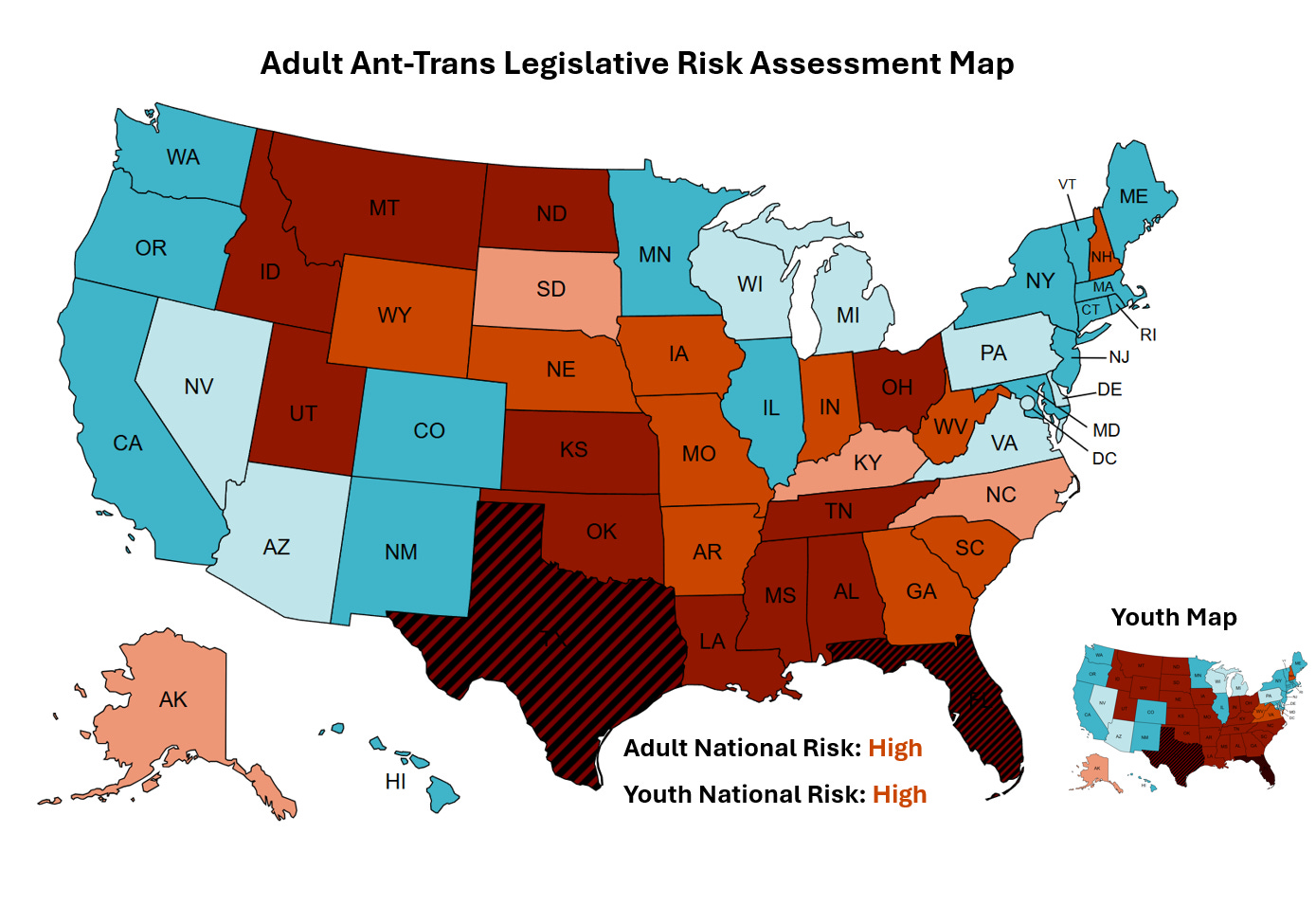
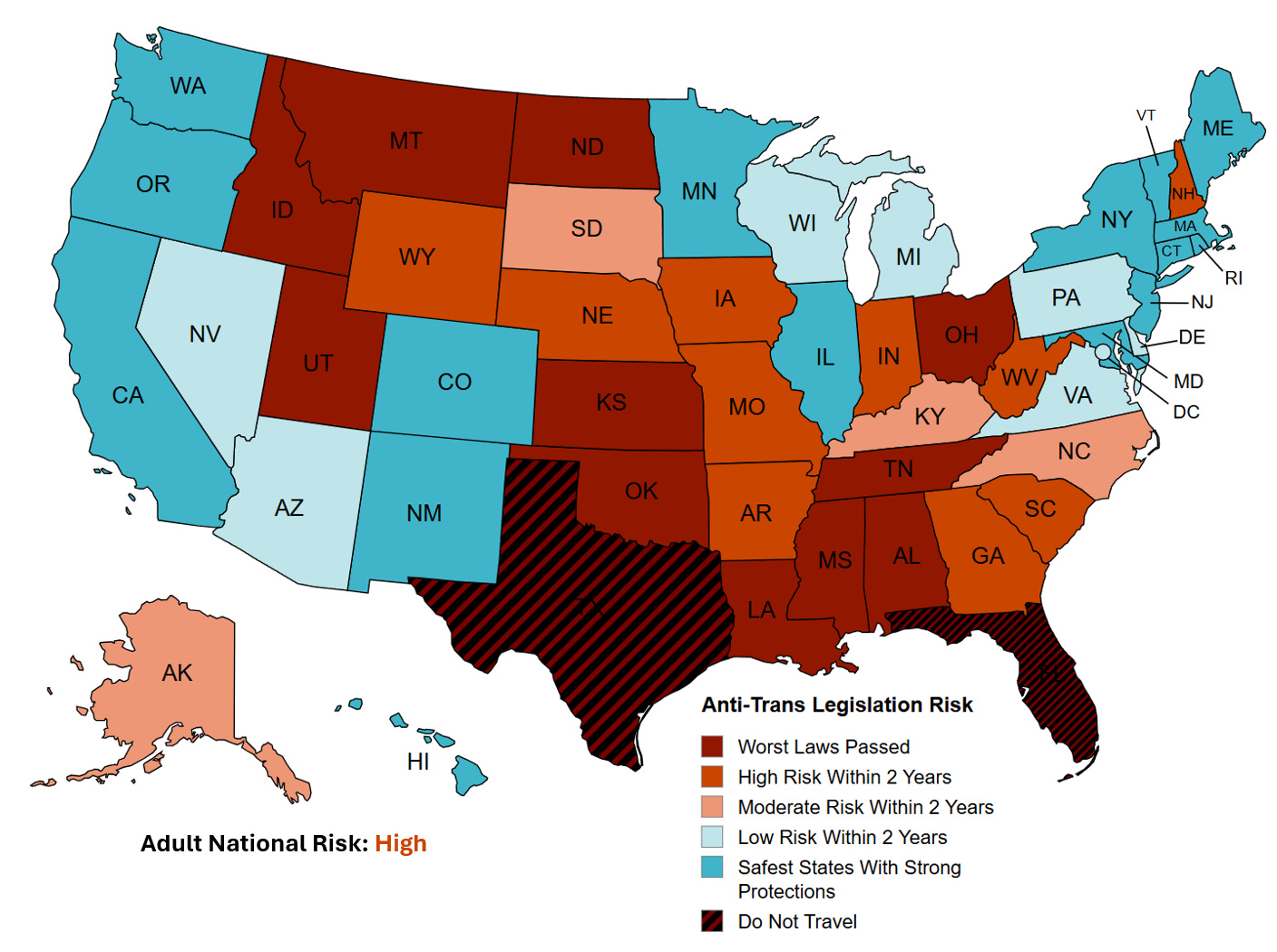
The Adult Trans Legislative Risk Assessment Map
Moves in this update: Wyoming (Moderate Risk → High Risk), Georgia (Moderate Risk → High Risk), Washington, D.C. (Safest States → Low Risk)
Summary of updates: The national picture remains unchanged, as a high risk was instituted for transgender adults on the map in the leadup to the 2024 election in anticipation that a Republican victory was possible. However, in the District of Columbia, anti-trans policies have already taken shape, including a ban on transgender people from bathrooms in House office buildings and further legislation proposed targeting trans people on all federal property, including potentially airports. As a result, the city is now in the “Low” risk category rather than the “Safest” category, though this move may not mean much for most residents who do not frequent Capitol buildings. Two other states, Wyoming and Georgia, expect anti-trans legislation targeting transgender adults to be heard in 2025 with local news covering such potential pushes, including bathroom bans.
Nationwide Risk: High. Attacks on trans people were a significant part of the 2024 election cycle, and Trump has already shown an appetite to appoint anti-transgender extremists to major posts in government. These include Harmeet Dhillon, a major anti-trans attorney who represents Chloe Cole, and Trump’s pick for FTC commissioner Andrew Ferguson, who has stated he will target youth and adult care.
Here are the categories:
Do Not Travel (FL, TX): Two states have earned “Do Not Travel” advisories: Florida and Texas. Florida has a law that allows for the arrest of transgender people for using bathrooms according to their gender identity and another policy targets transgender people’s drivers licenses. Florida has also put into effect a policy that says trans people “misrepresenting” their gender on their drivers license could be guilty of fraud. Local LGBTQ+ orgs as well as HRC have issued travel advisories for the state. This analysis likewise concurs with such a rating. In Texas, the state is not only ignoring court ordered drivers license changes for trans adults, but it is also creating a database of people attempting to make such changes. Meanwhile, Odessa, TX has passed a bounty ordinance that puts $10,000 bounties on transgender people in bathrooms, with more legislation expected this year.
The Worst States (AL, ID, KS, LA, MS, MT, OK, ND, TN, UT): These states have passed deeply troubling legislation targeting transgender adults in extremely harmful new ways. Kansas and Utah have bathroom bans for transgender adults. Alabama has also passed a Don’t Say Gay bill that includes a bathroom ban on college campuses. Many states, including Kansas, Louisiana, Mississippi, Montana, Oklahoma, and Tennessee, have gone so far as to legislatively erase transgender people, effectively removing any legal rights associated with their gender identities. Other states, such as Kansas, Montana, North Dakota, Oklahoma, and Tennessee, prohibit any changes to birth certificates, forcing trans people to out themselves when showing their documents. In Kansas, this law could even force individuals who have updated their driver's licenses and birth certificates to see their gender markers reverted. These states also could start targeting adult gender affirming care - Florida has already done so, banning 80% of such care. Idaho has an extreme ban on state funds for gender affirming care.
High-Risk States (AR, GA, IA, IN, MO, NE, NH, OH, SC, WV, WY): All of these states have passed anti-trans laws, but they haven't reached the same level of severity as the worst states. Missouri and West Virginia, for example, prohibit gender-affirming care for incarcerated adults as well as transgender youth and have seen new laws proposed this cycle going even further. Nebraska’s governor has issued an executive order ending legal recognition of trans people. Additionally, some of these states, including Arkansas, have laws that permit the refusal of medical care to LGBTQ+ individuals on religious grounds. Although each of these states has laws targeting transgender adults, none have done so to the extent of the worst states.
Moderate-Risk States (AK, KY, NC, SD): These states have either passed one or two laws aimed at transgender adults or have enacted multiple laws targeting transgender youth, or are advancing negative laws quickly. For states focusing on trans youth, history shows they are more likely to introduce anti-trans legislation for adults in subsequent years. Most of these states are under Republican control, either through supermajorities in the legislature or Republican governorships. Many have enacted "Don't Say Gay" provisions, which frequently result in the banning of transgender teachers. Additionally, many have passed religious refusal rights bills. However, most of these states have either not yet ventured into anti-trans adult legislation or have only passed milder forms of such laws.
Low-Risk States (AZ, DE, MI, NV, PA, VA, WI, DC): These states have largely refrained from targeting transgender adults, although they haven't taken extraordinary steps to protect adult transgender rights either. For example, Arizona and Virginia have enacted anti-trans policies affecting youth but, due to state-specific factors, appear unlikely to extend such policies to adults. Conversely, Michigan, and Nevada have enacted fairly robust non-discrimination policies but fall short in ensuring healthcare equity and providing protections for incarcerated transgender individuals. While these states generally offer a safer environment for transgender adults, they stop short of going the extra mile to make their jurisdictions unequivocally safe places to reside. In the case of the District of Columbia, it may fall under attack from Congress and executive actions, meaning it can no longer be considered “most protective.” This most recently was manifested with the DC House bathroom ban.
Most Protective States (CA, CO, CT, HI, IL, MA, MD, ME, MN, NJ, NM, NY, OR, RI, VT, WA): These states have gone above and beyond in safeguarding the rights and well-being of transgender individuals, making them highly desirable places to live for those in search of security. States like Colorado, Hawaii, Maryland, and Washington have enacted comprehensive health insurance laws that cover facial hair removal and an expanded range of medical procedures. Each of these states offers refugee protections for individuals fleeing more repressive states with anti-trans laws. Care is not only supported but also enjoys legal reinforcement from the state, ensuring accessibility as long as such treatments remain lawful at the national level. These states are the most likely to counteract federal anti-trans regulations if faced with a Republican presidency.
Erin In The Morning is a reader-supported publication. To receive new posts and support my work, consider becoming a subscriber.
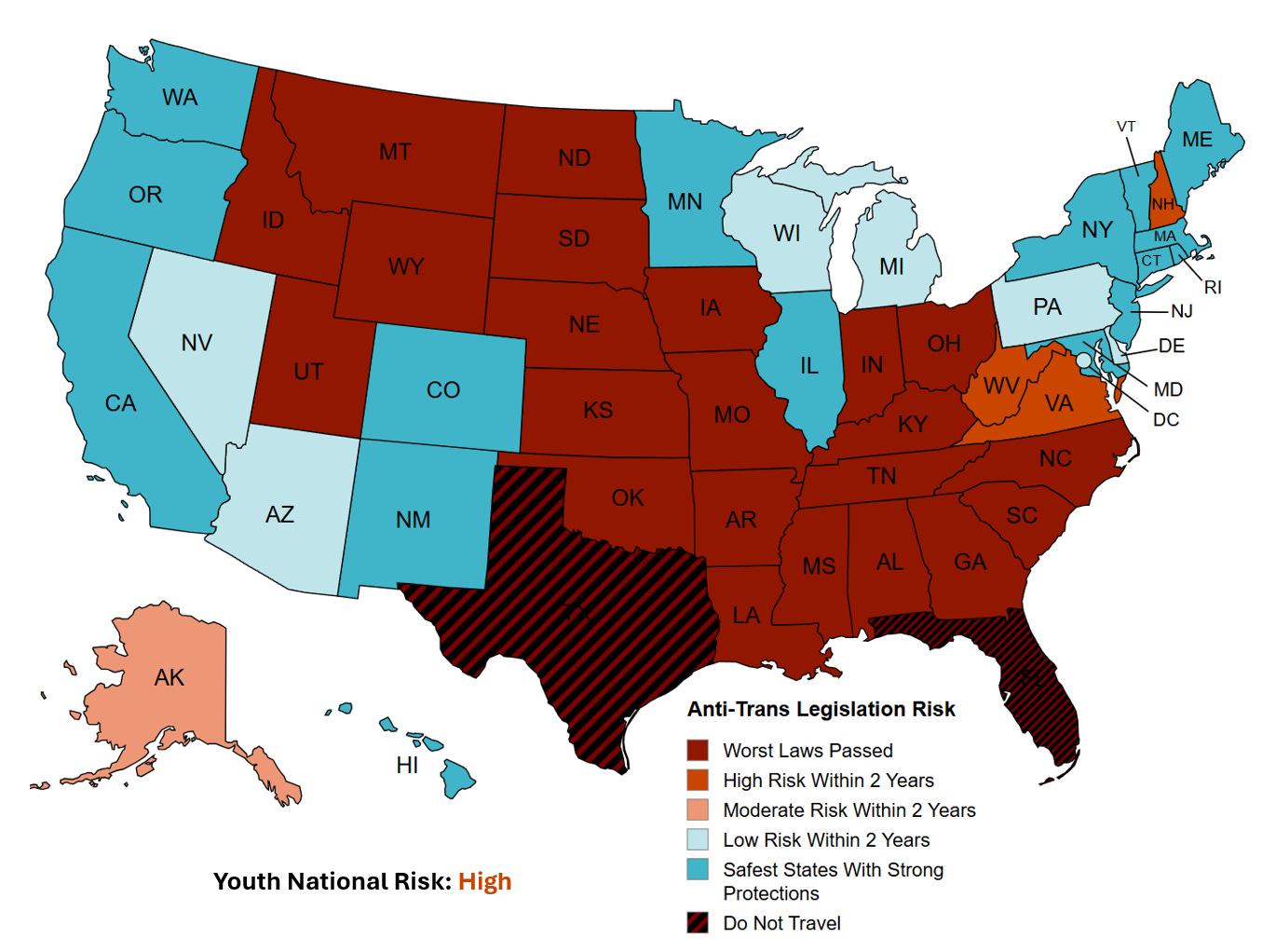
The Youth Trans Legislative Risk Assessment Map
Very few states now occupy the middle ground in the realm of anti-trans legislation for transgender youth. Those marked in dark red have enacted bans on gender-affirming care for transgender youth, with many even mandating medical detransition for these young people. Conversely, states shown in dark blue have implemented refugee protection laws for trans youth seeking to escape the harsh legal environments of more restrictive states.
Moves in this update: Washington, D.C. (Safest States → Low Risk), Washington State (Low Risk → Safest States)
Summary of updates: Two changes occurred this month. Washington, D.C. has been downgraded to Low Risk instead of Safest States due to expected federal legislation targeting transgender people. Washington State, meanwhile, has improved to Safest States, a category it once held but lost after the passage of a bill that could lead to forced outings. With the reelection of Chris Reykdal to superintendent of public instruction and strong protections in place, those concerns are somewhat mitigated. Meanwhile, the state maintains extensive protections for trans youth.
Nationwide Risk: High. The 2025 election results are likely more dangerous for trans youth than even for adults. Nationwide bans are in the picture and the bulk of legislation will likely target transgender youth, potentially even in “safe” states.
Erin In The Morning is a reader-supported publication. To receive new posts and support my work, consider becoming a subscriber.
Two academics have argued that the "harmful over-consumption of schooling" is responsible for the plummeting birth rate across the U.S.
Jay P. Greene and Lindsey M. Burke, both Ph.Ds, are concerned that other Americans may be becoming unnecessarily educated. An overview of their argument was published on Monday on the website of the Heritage Foundation, a think tank where Burke is the director of the Center for Education Policy and Greene is a senior research fellow.
The Heritage Foundation is the group behind Project 2025, the conservative manifesto for how the U.S. should be restructured under incoming President Donald Trump.
Birth rates have plunged in the U.S. and the authors say the average American woman will have just 1.6 children in her lifetime, "far below the rate of 2.1 required to maintain a steady population."
Greene and Burke believe education policy discourages Americans from starting families in favor of attending university and also suppresses religious beliefs that encourage high fertility rates.
While highlighting the benefits of higher education, the authors said, "Good things can become bad when pursued in excess."
The trend of fewer children being born now means an increasingly elderly population with a reduced working-age demographic in the future. Experts have warned of a looming "silver tsunami" after U.S. Census Bureau figures suggested that by 2035 older adults will outnumber children—a first in American history.
Some high-profile figures have raised awareness of the issue. Business mogul Elon Musk, who has been given an "efficiency" brief in Trump's upcoming administration, is passionate about "pro-natalism" and is known to have fathered 12 children.
Europe is similarly concerned, with its nations meeting in September to discuss a report that laid bare the strain due to be placed on welfare systems and public finances with a sharp fall of working age citizens and an aged population.
In the U.K, deaths outnumbered births for the first time in 50 years (excluding the COVID-19 pandemic), officials revealed in October.
There are some countries bucking the trend, however, with a skyrocketing population surge forecast for Africa. The population of sub-Saharan Africa is projected to double by 2050, according to the United Nations.
Some argue that a shrinking population is beneficial, being a marker of women's reproductive rights. Environmental activists suggest it will lead to a greener world with fewer people burning through finite natural resources and polluting the planet.
The full article by Greene and Burke was originally published last week by online magazine The Federalist and attempts to offer a solution to the problem. It was titled: Here's How To Actually Reverse The Baby Bust.
Greene and Burke noted there are many "cultural and technological factors" at play that have resulted in hospitals' emptier birth wards in the U.S. But arguments that it is the high cost of rearing children that puts off prospective parents appear to be unfounded, they wrote.
Hungary and South Korea have both "offered very generous government subsidies for families having children (...) [but] these large expenditures clearly haven't helped." Americans had more children in the past when "people had significantly less money than they do now," they added.
"The best way to promote fertility isn't funding parenthood. It's stopping the government programs that discourage people from having babies," the authors wrote.
Education was the prime example of this, they suggested, arguing that "current education policies push people to delay having families until they are much older and impose barriers to accessing religious education, both of which significantly reduce fertility rates."
Young people are pushed toward university due to "enormous incentives" and "highly subsidized student loans." This has "created an artificially extended adolescence for the bulk of American young people."
The more educated the woman, the older she is when she begins to have children, the authors said. Some 21.8 percent of women with a bachelor's or higher degree will never have any children at all, Greene and Burke wrote.
"Education policy also suppresses fertility by discouraging parents from choosing religious education in K-12 schools," they said, noting, "Adults who are more strongly attached to religion tend to have many more children."
The pair praised higher education, saying it "can have significant economic and social benefits," concluding: "Good things can become bad when pursued in excess. Believing that government subsidies for higher education have induced harmful over-consumption of schooling is no more against higher education than fighting obesity is against caloric intake."
The authors concluded: "The first two policies we could discontinue are those that push people to remain in school longer than they otherwise would and those that burden religious beliefs that make having babies more likely."
Newsweek has reached out by email to the Heritage Foundation and the Harvard Center for Population and Development Studies seeking comment.
 Log in